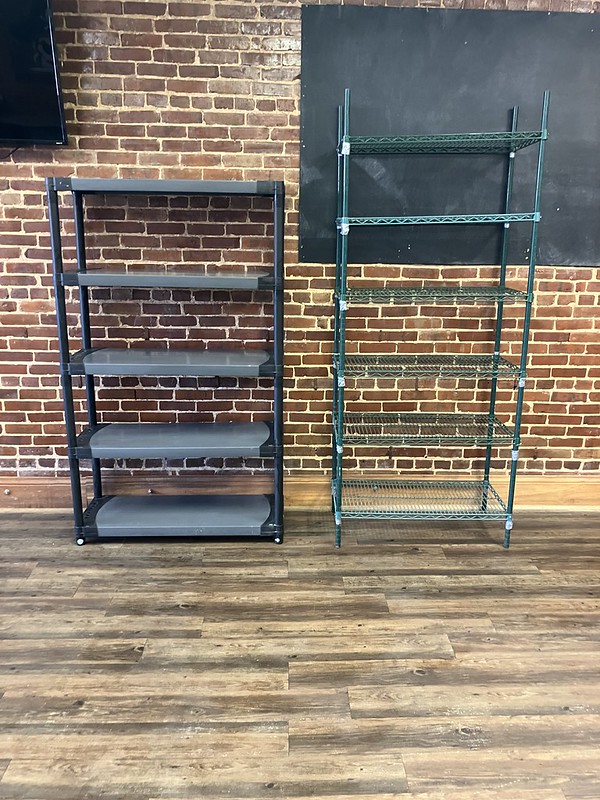
Building Out The Q’s Oven Capacity

A shared commercial kitchen grows one practical piece at a time.

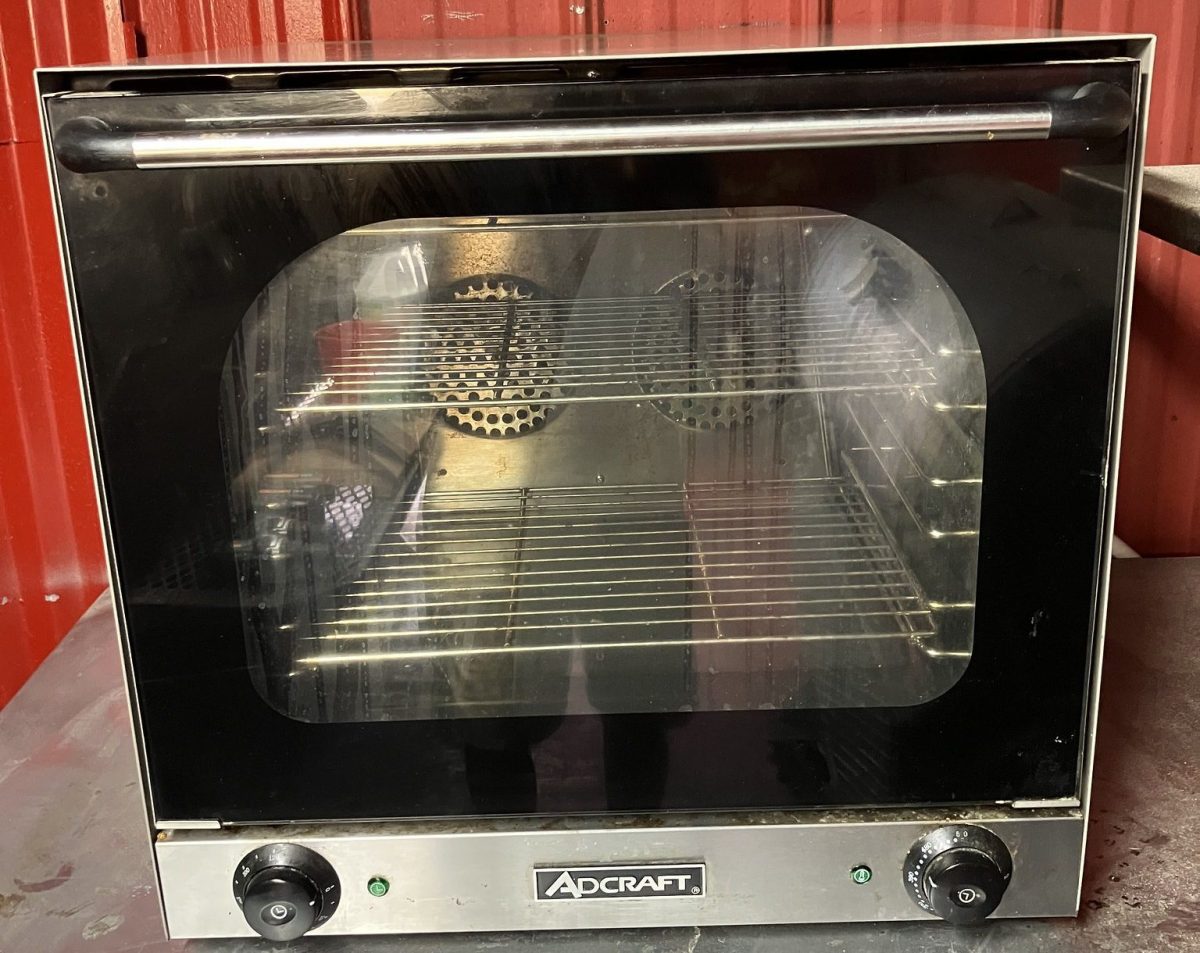
This week, we moved a smaller countertop convection oven back to The Q. It had been in another building for a while, but it belongs better here, where approved food operators may be able to use it for smaller baking, reheating, roasting, or production tasks.

It is not the final answer to every operator’s oven needs.

But it is useful.

Continue reading “Building Out The Q’s Oven Capacity”

Why a Food Truck Needs a Real Commissary

A food truck may look independent.

It has its own equipment.
It has its own menu.
It may have its own following.
It may show up at events, parking lots, schools, ballgames, factories, churches, and festivals.

But a serious food truck still needs a dependable base.

Continue reading “Why a Food Truck Needs a Real Commissary”

A 90-Day Way to Test a Food Idea

People may keep asking you to sell your food.

At first, that feels like a compliment.

Then it becomes a question.

Could this become something real?

That question can be exciting. It can also be intimidating.

Continue reading “A 90-Day Way to Test a Food Idea”

A Smaller Way to Sell Food Without Opening a Restaurant

Opening a restaurant is expensive.

Rent.
Equipment.
Utilities.
Employees.
Insurance.
Inventory.
A dining room.
A full menu.
Long hours.
Daily pressure.

For many beginning food operators, that is too much too soon.

But that does not always mean the food idea should be ignored.

Continue reading “A Smaller Way to Sell Food Without Opening a Restaurant”

One Good Food Item May Be Enough to Begin

A beginning food operator may think the first menu has to be big.

That is understandable.

Restaurants have menus.
Food trucks have menus.
Catering companies have menus.
Meal-prep services have menus.
Customers seem to expect choices.

So the person with a food idea may start adding too much too soon.

Continue reading “One Good Food Item May Be Enough to Begin”

When People Keep Asking You to Sell It

A food business does not always begin with a business plan.

Sometimes it begins with a question.

“Do you sell this?”

Or:

“You ought to make this for people.”

Or:

“How much would you charge?”

Or:

“Can I order some next week?”

At first, those comments may feel like ordinary compliments. Somebody liked the sauce. Somebody liked the BBQ. Somebody liked the chicken salad, the casserole, the dessert, the taco, the meal-prep plate, or the coffee.

That is encouraging.

But if the same question keeps coming back, it may become something more.

It may become a small signal.

Continue reading “When People Keep Asking You to Sell It”

Not Every Food Operator Needs the Same Thing

A shared-use commercial kitchen can sound simple from the outside.

Someone needs a kitchen.
The kitchen has space.
The operator rents the space.
The food business begins.

But in real life, it is rarely that simple.

Continue reading “Not Every Food Operator Needs the Same Thing”

What One Good Fire Can Start

Some food businesses begin with a recipe.

Some begin with a family meal people keep asking for.

Some begin with a trailer, a smoker, a grill, or one idea that will not leave a person alone.

At The Q, one of the questions we keep asking is simple:

What could a serious food operator start if the first step did not have to be a full restaurant?

For some operators, the answer may begin with fire.

Continue reading “What One Good Fire Can Start”

Start Small, But Start Clearly

Starting small is not the same as starting casually.

That is an important distinction in the food business.

A person may not be ready to open a full restaurant. They may not need a long lease, a dining room, a large staff, a full buildout, or the risk that comes with trying to do everything at once.

But that does not mean the beginning should be vague.

A smaller beginning still needs structure.

At The Q — Commercial Kitchen & Commissary in downtown Boaz, this is one of the ideas we keep returning to:

A food operator can start smaller, but the arrangement still needs to be clear.

A smaller start can take many forms

Not every food business begins the same way.

One operator may need basic food truck commissary support.

Another may need a place for dry storage.

Another may need refrigeration.

Another may need scheduled warewashing after trailer service.

Another may need a few hours of kitchen prep time.

Another may need a retail pickup arrangement.

Another may need smoker or chargrill access.

Another may begin with one weekly menu, one pickup window, one food truck route, one catering line, one coffee trailer, or one simple product customers keep asking for.

All of those may be small beginnings.

But they are not all the same kind of use.

That is why The Q has to ask questions before saying yes.

What do you actually need?

A food operator may begin by saying, “I just need a commissary.”

But that phrase can mean different things.

Do you need fresh water?

Do you need gray-water disposal?

Do you need trash disposal?

Do you need a place to store dry goods?

Do you need a cooler?

Do you need freezer space?

Do you need to wash pans, utensils, or trailer equipment?

Do you need to use a prep table?

Do you need to package food?

Do you need to cook, cool, reheat, slice, portion, or assemble food?

Do you need customers to pick up orders from the front counter?

Those are different needs.

They involve different spaces, different schedules, different responsibilities, and different prices.

The clearer the arrangement is at the beginning, the better it is for everyone.

Clear agreements protect the operator too

Sometimes written agreements can feel formal.

But in a shared-use food facility, they are necessary.

A clear agreement helps the operator know:

  • what services are included;
  • what services are not included;
  • when access is allowed;
  • what areas may be used;
  • what must be scheduled;
  • what costs extra;
  • what has to be cleaned and reset;
  • and what happens if the business grows into a larger need.

That clarity protects The Q, but it also protects the operator.

Nobody wants confusion after the business has already started.

Nobody wants to assume a cooler is included when it is not.

Nobody wants to assume sink use includes full trailer cleanup when it only includes basic servicing.

Nobody wants to assume a dry-storage shelf means full kitchen access.

Nobody wants to discover too late that the health department, the facility, and the operator were all thinking about the arrangement differently.

Clear agreements prevent that.

Small does not mean free-form

A food business has to deal with reality.

Food has to be stored safely.

Water has to be handled correctly.

Waste has to be disposed of properly.

Shared sinks have to be cleaned and reset.

Coolers and freezers have to be organized.

Prep tables have to be scheduled.

Customers have to know where to go.

Operators have to avoid interfering with one another.

The facility has to remain clean, safe, and workable for the next person.

That is why “small” still needs discipline.

A one-day-a-week food concept still needs discipline.

A food truck commissary arrangement still needs discipline.

A coffee trailer still needs discipline.

A BBQ pickup model still needs discipline.

A small beginning may reduce risk, but it does not remove responsibility.

The Q is built around this middle step

The Q exists because many food operators are not ready for a full restaurant, but they still need something more serious than working informally.

They need a permitted place.

They need a conversation.

They need a workable arrangement.

They need a way to start without pretending they already have a full restaurant.

That middle step matters.

It may be the difference between a good idea staying stuck and a good idea becoming a real food business.

But the middle step only works when it is clear.

Start small, but know the arrangement

The first question is not always, “How big can this become?”

Sometimes the better first question is:

What do you need right now?

Basic commissary service?
Storage?
Refrigeration?
Warewashing?
Kitchen access?
Smoker or chargrill use?
Retail pickup?
A limited weekly schedule?

Once the actual need is clear, the arrangement can be built around it.

That is how a food operator starts smaller without starting sloppy.

That is how a shared-use facility stays workable.

That is how The Q can support more than one kind of food business without turning everything into confusion.

A smaller start can be a smart start.

But it needs to be clear.


The Q — Commercial Kitchen & Commissary

106 South Main Street
Boaz, Alabama

Food operators interested in kitchen access, food truck commissary support, dry storage, refrigeration, warewashing, smoker / chargrill access, or retail food opportunities can call or text 256-557-0517 to schedule a tour and conversation.
The First Operator Changes the Room

A commercial kitchen can sit quiet for a long time and still be full of possibility.

The equipment may be there. The sinks may be there. The coolers may be there. The prep tables, counters, storage shelves, and pickup area may all be waiting. From the outside, it may look like a finished place.

But a food business facility does not really become alive because equipment is in the room.

It changes when an operator walks in with a plan.

That is beginning to happen at The Q — Commercial Kitchen & Commissary in downtown Boaz.

From space to use

For a while, much of The Q has been about preparation.

Cleaning. Arranging. Moving equipment. Thinking through traffic flow. Deciding what should happen in the kitchen, what should happen at the front counter, and how customers should pick up food without turning the building into a full restaurant dining room.

Those are practical questions.

Where does an operator stand? Where does an order wait? Where does the customer enter? Where does the handoff happen? How do we keep the kitchen organized? How do we help a serious food operator start smaller?

Those questions matter because The Q is not just a room for rent.

It is meant to be a place where serious food operators can begin, test, prepare, serve, and grow carefully.

Backwoods BBQ and the first retail step

We are pleased that Dorothy Jones and Backwoods BBQ are preparing to operate from The Q as a retail food operator.

Backwoods BBQ gives us a real example of what The Q was created to support.

Dorothy has a BBQ trailer and a food concept built around slow-smoked barbecue. Her plan is to smoke her barbecue at her home location, then use The Q as part of the approved operating path for preparing, staging, packaging, and selling through a downtown pickup arrangement.

That is different from opening a full restaurant.

It is also different from casual kitchen rental.

It is a middle step.

A serious food operator can begin with a focused concept, an approved schedule, a commercial kitchen, a pickup counter, and a way to serve customers without taking on all the cost and risk of a full restaurant buildout.

That is the model The Q is trying to make possible.

The pickup counter matters

The old dining room at The Q is changing.

The tables and chairs are gone. The room is being reconsidered. The question is no longer, “How do we seat a dining room full of people?”

The better question is:

How do we create a simple, clear pickup experience?

A customer should be able to walk in, know where to go, pick up an order, and leave without confusion. The operator should be able to move food from the kitchen to the counter safely and efficiently. The facility should remain clean, controlled, and workable for other users.

That may sound simple, but it is part of the design of the business.

Food service is not only about the food. It is about systems.

The pickup counter, the order flow, the operator schedule, the cleanup rules, the storage boundaries, and the customer path all matter.

Starting smaller is still serious

One mistake people make is thinking “small” means casual.

It does not.

A one-day-a-week food concept can still be serious. A pickup-only menu can still be serious. A limited BBQ schedule can still be serious. A food truck commissary arrangement can still be serious. A burger, chicken, taco, supper, coffee, or bakery concept can still be serious even before it becomes a full restaurant.

Starting smaller does not mean treating the business lightly.

It means reducing risk while building discipline.

It means learning demand before signing a restaurant lease.

It means proving the menu, the schedule, the ordering process, the cleanup rhythm, and the customer base one step at a time.

That is the kind of start many food operators need.

The room changes when the work begins

An empty room can hold a lot of ideas.

But a room changes when food starts moving through it.

It changes when the first operator has a schedule. It changes when the first customer walks in for pickup. It changes when the counter becomes more than furniture. It changes when the kitchen is no longer only prepared, but used.

That is what we are beginning to see at The Q.

Backwoods BBQ is not the end goal. It is a beginning.

The Q is being built for more than one operator and more than one kind of food business. Some operators may need kitchen access. Some may need food truck commissary support. Some may need dry storage, refrigeration, smoker or chargrill access, or a retail pickup model.

But every real food business starts somewhere.

For The Q, this is one of those starting points.

A place to start

The Q exists to help serious food operators start smaller, operate legally, work safely, and grow carefully.

That may mean preparing food for a trailer. It may mean supporting a mobile food business. It may mean testing a retail pickup concept. It may mean using the smoker, chargrill, kitchen, storage, or front counter in a carefully approved way.

The first step is usually not a full restaurant.

The first step is a conversation, a plan, a schedule, and a place where the work can begin.

That is what The Q is here to provide.


The Q — Commercial Kitchen & Commissary

106 South Main Street

Boaz, Alabama

Food operators interested in kitchen access, food truck commissary support, smoker / chargrill access, dry storage, refrigeration, or retail food opportunities can call or text 256-557-0517 to schedule a tour and conversation.


The front room at The Q is being shaped into a simple pickup area for approved retail food operators.