A shared-use commercial kitchen can sound simple from the outside.
Someone needs a kitchen.
The kitchen has space.
The operator rents the space.
The food business begins.
But in real life, it is rarely that simple.
One food operator may need a commissary for a food trailer.
Another may need dry storage.
Another may need refrigeration.
Another may need a place to wash pans and utensils after service.
Another may need scheduled prep-table time.
Another may need commercial kitchen access for production.
Another may need a smoker, chargrill, or pickup counter.
Another may need a place to test a retail food concept one day a week.
Those are not all the same need.
And at The Q — Commercial Kitchen & Commissary in downtown Boaz, we are learning to treat them differently.
“Kitchen rental” is too broad
The phrase “kitchen rental” can hide a lot of important details.
Does the operator need to cook?
Does the operator need to prep?
Does the operator need to store food?
Does the operator need a cooler?
Does the operator need freezer space?
Does the operator need to use the three-compartment sink?
Does the operator need customer pickup?
Does the operator need to bring in equipment?
Does the operator need access once a week, twice a week, or several times a week?
Those questions matter because each answer affects the facility.
A cooler uses space and electricity.
Dry storage needs organization and boundaries.
Warewashing uses sinks, hot water, sanitizer, and cleanup time.
Kitchen production uses prep tables, equipment, scheduling capacity, and reset time.
Retail pickup affects the front room and customer flow.
Smoker and chargrill use affects scheduling, fuel, cleanup, food safety, and production planning.
So the better question is not simply:
Do you need a kitchen?
The better question is:
What exactly do you need to do here?
Selected services keep the arrangement clear
The Q is moving toward a service-selection model.
That means an operator and The Q identify the actual services needed and approve them clearly.
For example, an operator may need:
Basic Food Truck Commissary Service
Fresh water, gray-water disposal, reasonable trash disposal, limited sink access for basic servicing, and documentation support.
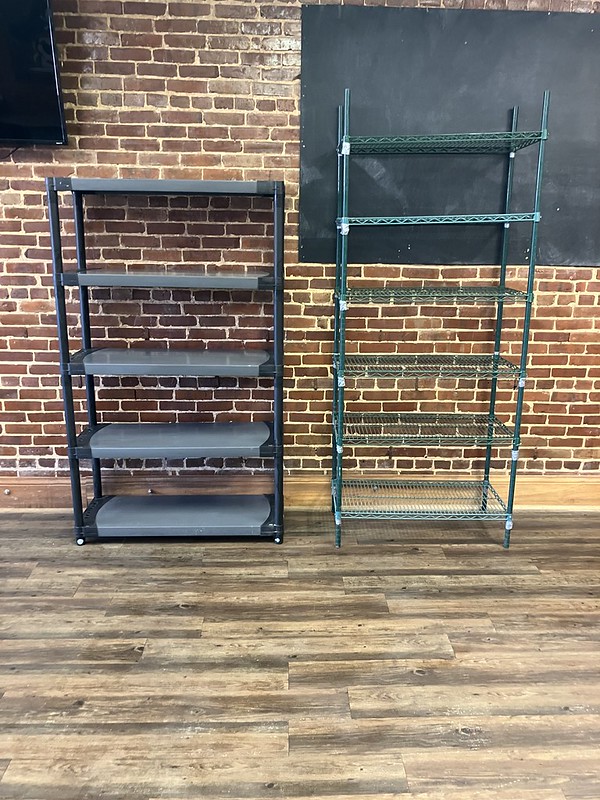
Dry Storage
Assigned shelf or rack space for approved dry goods, packaging, paper supplies, or sealed items.
Refrigerated Storage
Assigned cooler space or a dedicated cooler for approved, labeled, dated items.
Freezer Storage
Assigned freezer space, if available and approved.
Warewashing / Dishwashing
Scheduled use of a designated three-compartment sink for approved dishes, pans, utensils, trays, or containers.
Kitchen Access / Prep or Production Time
Scheduled kitchen use for approved activities such as prep, production, packaging, or other approved kitchen work.
Smoker / Chargrill Access
Approved and scheduled use of The Q’s smoker or chargrill.
Retail Pickup / Front Counter Use
Approved customer pickup or handoff through The Q’s front pickup area.
An operator may need one of those services.
Or several.
But none of them should be assumed.
Clear services protect everyone
This kind of structure may seem formal, but it protects both sides.
It helps the operator understand:
- what is included;
- what is not included;
- what the monthly price covers;
- what must be scheduled;
- what areas may be used;
- what costs extra;
- and what can be added later if the business grows.
It also helps The Q protect:
- the building;
- the equipment;
- the schedule;
- other operators;
- food safety;
- storage areas;
- customer flow;
- and the shared-use nature of the kitchen.
A shared facility cannot work well if every operator assumes a different version of the agreement.
Clarity is not red tape.
Clarity is what makes shared use possible.
Growth can be added carefully
A food operator may begin with one need and later grow into another.
That is normal.
A food trailer may begin with basic commissary support, then later need refrigeration.
A coffee operator may begin with limited kitchen production, then later need dry storage.
A BBQ operator may begin with kitchen prep and retail pickup, then later need more scheduled hours.
A meal-prep operator may need production time, refrigeration, storage, and a pickup model.
A burger concept may need chargrill access, kitchen prep, and scheduled retail pickup.
The Q’s job is not to force every operator into the same box.
The Q’s job is to help define the starting arrangement clearly, then adjust carefully as the business becomes more real.
Starting smaller still requires precision
The Q exists to help serious food operators start smaller, operate legally, work safely, and grow carefully.
But “start smaller” does not mean “start vaguely.”
A smaller start may actually require more precision.
One day per week still needs a schedule.
One cooler still needs rules.
One storage rack still needs boundaries.
One pickup window still needs customer flow.
One smoker session still needs cleanup.
One kitchen tier still needs approved hours and approved activities.
That precision makes the small beginning stronger.
The right fit
Not every operator needs The Q in the same way.
That is why the first step is usually a conversation.
What kind of food business are you building?
Are you mobile, production-only, retail pickup, catering, meal prep, coffee, BBQ, burgers, baked goods, or something else?
What does the Health Department require?
What parts of the operation happen somewhere else?
What parts need to happen at The Q?
How often do you need access?
Do you need storage, refrigeration, warewashing, kitchen time, smoker access, chargrill access, or customer pickup?
Those answers help shape the agreement.
The goal is not to make the process complicated.
The goal is to make the process honest.
Because a food business needs more than a place.
It needs the right arrangement.
The Q — Commercial Kitchen & Commissary
106 South Main Street
Boaz, Alabama
Food operators interested in kitchen access, food truck commissary support, dry storage, refrigeration, warewashing, smoker / chargrill access, or retail food opportunities can call or text 256-557-0517 to schedule a tour and conversation.


